

Platform
Eva V1.6 Detection Model
The engine behind every ScamAI result. One API scores faces, documents, and AI-generated media — and returns a verdict, a confidence score, and a plain-English summary of what it found.
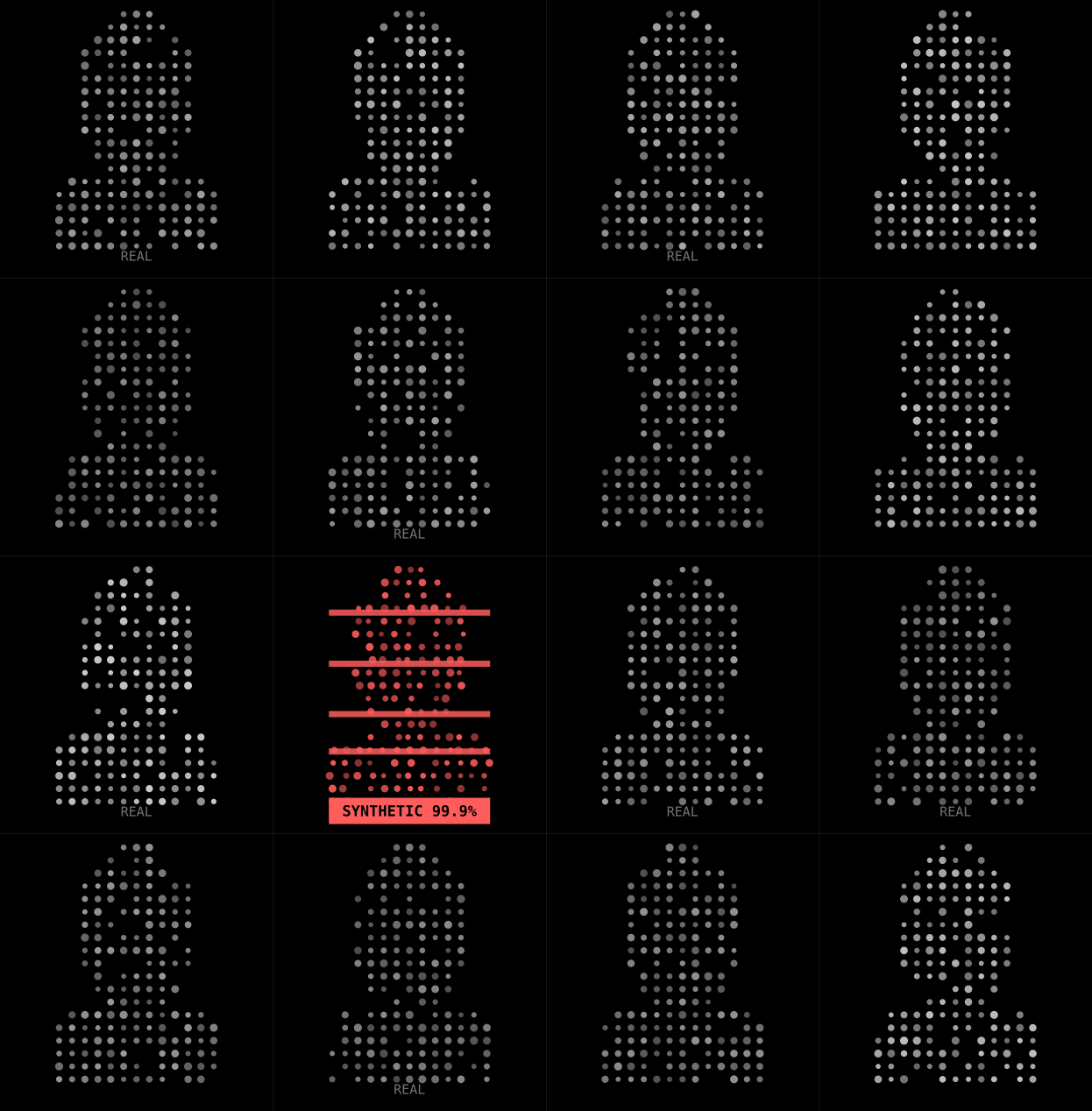
98.2%
deepfakes caught
Trusted by fraud, risk, and trust & safety teams at banks, fintechs, insurers, and marketplaces.
One engine, three models
- Faces, documents, and AI-generated media — one API
- A tiered verdict with the confidence behind it
- Runs in the cloud, on-prem, and on device
Deepfake detection
Swapped faces and synthetic video, scored by an ensemble reading generation artifacts, blending seams, and frame-to-frame inconsistencies.
Inside a result
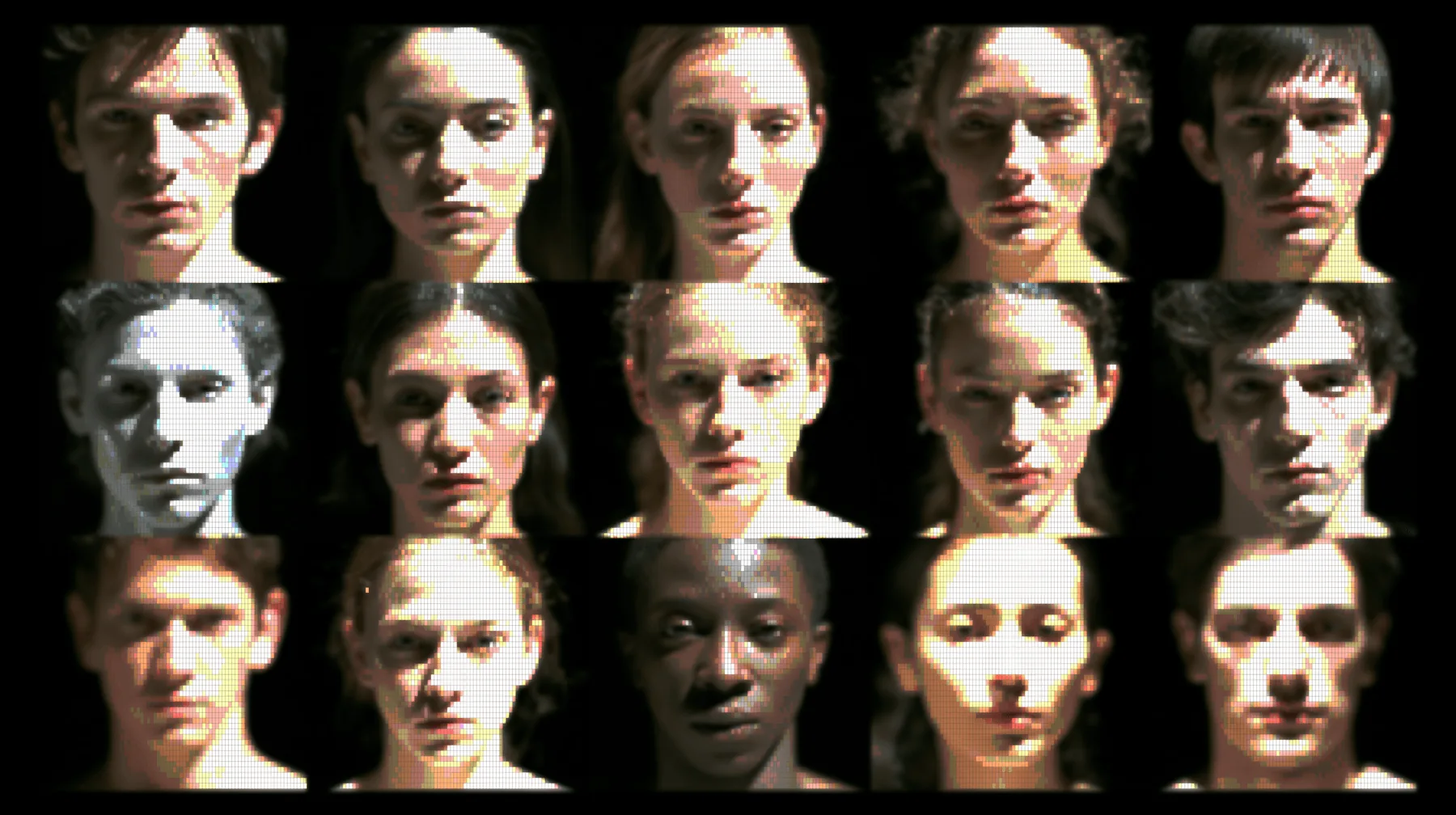
Media comes in, the model routes it to the right detectors, weighs the signals together, and returns one probabilistic score — with a verdict and a plain-English summary of what it found. Deeper per-signal evidence is available on request.
Deployed where the risk is
Cloud API
One REST endpoint for real-time and batch flows.
On-prem
The same engine inside regulated environments.
On device
Local detection for live video meetings.
Common questions
What is the Eva V1.6 Detection Model?
The Eva V1.6 Detection Model is the detection engine behind every ScamAI result. Through one API it analyzes faces, images, video, and documents for signs of manipulation — face swaps, fully AI-generated media, and edited or forged documents — routing each to a specialist detector and returning a probabilistic confidence score with a plain-English summary of what it found. Per-detector signal breakdowns are available on request. The model is retrained as new generation tools appear, and the same engine runs behind the cloud API, in on-prem deployments, and on-device inside Halo for live meetings.
How does the Eva V1.6 Detection Model detect deepfakes?
The Eva V1.6 Detection Model looks for the traces synthetic media cannot help leaving: statistical artifacts from generation models, blending boundaries where a swapped face meets the original frame, temporal inconsistencies across video frames, and capture characteristics that do not match a physical camera. No single signal decides the result — the model weighs them together into one confidence score, reported with a plain-English summary of what it found. A breakdown of which signals fired is available on request. Because detection is probabilistic, you choose the threshold that fits your risk tolerance rather than accepting a fixed yes/no answer.
Does the Eva V1.6 Detection Model give a yes/no answer or a confidence score?
A confidence score, with context. Every result includes a probabilistic score, a tiered verdict — likely real, needs review, or likely AI-manipulated — and a plain-English summary of what the model found, so you can see how strongly media was flagged, not just that it was. Your team sets thresholds on that score — auto-decline above one line, route to human review above another, pass below both — which keeps the false-positive and false-negative trade-off in your hands. For audit and compliance teams, named per-signal breakdowns are available on request.
/ See it in action
Put the Eva V1.6 Detection Model to the test
Run detection on a live call, a document, or a face — and watch ScamAI flag what’s synthetic instantly.